January 13, 2005 at 9:56 a.m.
New recycling company faces many challenges in start-up
New recycling company faces many challenges in start-up
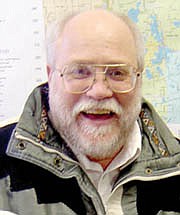
Glassel’s business venture is the Chisago County Recycling Cooperative, which he refers to as a non-profit alternative to commercial waste hauling.
His idea is that as much as 68 percent of all garbage currently being thrown away in the county can be recycled. The county averages close to a 30 percent recycling rate for all waste – Glassel said the number could be closer to 98 percent with his plan.
Chisago County officials, including Solid Waste Administrator Gary Noren and Steve Putman, Chisago County Code Enforcement Officer, are skeptical of Glassel’s plans. To date, they are unaware that Glassel has submitted any type of business plan nor completed any permitting process necessary to operate a solid waste business at the county and state level.
Noren also believes Glassel doesn’t have the correct information on the waste flow within the county to make the idea of recycling 98 percent feasible.
Glassel disagrees, saying commercial garbage haulers have created myths about recycling. “There is a lot of misinformation about recycling,” Glassel said. “Everything you buy can be returned down to the original material.”
Glassel’s business plan has changed several times since its inception. The original proposals as outlined to county officials was to charge $1,000 per household as a one-time rate, then changed to $8 per person, not to exceed $24 per household each month.
Glassel also predicted having 200 members by Feb. 1.
Now, Glassel is targeting signing up 100 members by April and “another 100 each month after that,” he said.
The cooperative would essentially be made up of members who pay a one-time deposit of $300 – instead of the originally proposed fees – for the use of a rolling cart equipped with three recycling bins. The red, white and blue bins will be used to divide all of a customer’s trash.
The red bin would be for compostable material, including items such as diapers, food scraps, dog and cat waste, used paper products and yard waste.
The white bin would contain all clean and dry paper products like cereal boxes and newspapers.
The blue bin would hold plastic, metal and glass, including aluminum cans, broken toys, small appliances and all numbered plastic.
Glassel said with this system, he should be able to recycle nearly everything that people currently throw away.
Members, he said, will benefit from eliminating garbage hauling bills from their budget. Once the initial $300 deposit is made, there are no other fees involved. Members will receive their deposit back at any time if they choose to return the recycling cart and cease membership.
Glassel’s goal is to sign-up 10,000 members in the county, counting every household member. So far, no members have been signed up, but Glassel said the marketing phase of the business just started up.
The cooperative will originally target customers in the Chisago Lakes area, but Glassel said membership is open to all residents of Chisago County.
Once the member goal is achieved, the revenues gained through recycling all of the waste collected will lead to net profits that can then be returned to the members each year, Glassel said.
Glassel outlines projections of $1.7 million in revenue from selling the plastic, glass, aluminum, steel, paper and compost material the cooperative collects each year.
Glassel predicts that two years after reaching the membership goal the cooperative will be able to return about $100 to each member every year.
He also estimates more than 11,200 tons of waste will be collected each year by the cooperative. Of that, Glassel assumes he can compost one-third and reuse or recycle another two-thirds for a total of 94 percent, with 720 tons left over, mostly hazardous material.
Start-up costs for the business would be raised through membership drives and business sponsorships of the carts.
Glassel is seeking advertising sponsors to put their business name and logo on the side of carts, which are then used each week by members.
“We’re asking them to sponsor a cart for the same cost they used to pay for garbage each month,” Glassel said. The businesses would then receive a cart to use at their own location.
Glassel said the cooperative would arrange for larger items such as appliances and even vehicles to be picked up as well. He envisions breaking down each item into usable or recyclable components.
All of the waste will initially be picked up in the back of a 16-foot trailer, Glassel said, and the recyclables will be hauled to an existing recycling facility in Hugo. Glassel doesn’t have plans to include Washington County customers in the cooperative, however.
Glassel hopes to rent or lease a building in Lindstrom for eventually opening a thrift store to sell the usable items that are picked up by the cooperative. Glassel said the store would also accept drop-off of items much like the Family Pathways store in Wyoming.
“If we can’t sell it, we’ll give it away,” Glassel said. “If we can’t give it away, we’ll recycle it but we won’t put it in the landfill.”
He has also been working to find the best ways to break down each recyclable and finding businesses that will buy the end products.
“We’re shooting for the highest and best use of the products while raising awareness at the same time,” Glassel said.
Glassel has been in contact with a local company that makes plastic moldings used in construction. Plastic from ice cream buckets and other non-PETE plastics such as butter tubs could be ground down to remanufacture plastic for the moldings, he said.
At the same time, Glassel envisions being able to provide employment to clients of the Chisago Lakes Achievement Center. He hopes to train some of the clients to run the equipment used in grinding the plastic and hire them to construct the recycling carts, using old bed frames and ironing boards.
Glassel has met with Alan Olson, director of the CLAC, to discuss the possible collaboration. Olson said he may be interested in any jobs that may develop, but is not interested in having any recycling equipment installed at their site or working on marketing the recycled products. Olson also said he will not consider working with Glassel until he has obtained the proper licenses through the county and state for his business.
Composting
Glassel plans to convert unused silos in the county into a type of vertical compost unit, modeling the idea from a compost unit used on Lord Howe Island, a province of Australia.
The bottoms of the silos will be ventilated to allow air to flow through the layers of compost material and out the top of the silo.
Chisago County Master Gardener Richard Hanson said it is difficult to compost biological waste. “I know they don’t recommend animal feces or diseased plants in composting because you’d have to get it very hot to kill bacteria,” he said.
Glassel claims that using a silo to compost will raise the temperature to above 150 degrees inside the silo, killing any bacteria present.
James Reifenberg, also a Chisago County Master Gardener, said he is uneasy about adding animal and human feces to composting. “Any time you do that you’re starting up a vehicle for the transmission of diseases,” he said.
Tom Halbach, Professor and Extension Educator at the University of Minnesota’s Department of Soil, Water and Climate, said it may be extremely difficult to measure the temperature throughout the compost mixture in a large structure such as a silo.
He said temperatures need to reach at least 131 degrees for four days in an enclosed structure to reduce any pathogens in the compost material. Even then, hot and cold spots will exist in the mixture. “You need to have a trained compost operator complete the measurements each day and turn the mixture at least 4 times in that time period, which may be difficult,” he said.
Halbach said the Minnesota Pollution Control Agency has strict regulations bound by legal standards that define composting and these regulations have been enforced in the state.
In the late 1980s, more than 200 composting facilities were permitted by the PCA to operate in Minnesota. Most of those have closed, Halbach said, including 7 of the 8 facilities run by government organizations including Chisago County’s composting site in Mora.
He said with a system like Glassel is proposing, he would be concerned with the levels of methane gas that could potentially exist. Methane is combustible and could cause a large explosion that would level any building within several hundred feet of the silo, Halbach said.
Glassel contends that composting is fairly simple; Halbach said not all compost is created equal. “All organic waste can be composted but all at different rates, “ Halbach said. “There is a whole range of materials from stuff that gets broken down by bacteria very quickly and others that take a long, long time to break down.”
He said the organic material needs to be monitored for the correct combination of nitrogen and carbon in order to ensure efficient composting and the reduction of pathogens.
Water also plays a significant part in composting. Moisture content needs to be maintained in order for microbes to thrive as they work to break-down material into compost. Halbach said water totalling as much as 7 percent of the total volume of compost material may need to be added on a hot, windy August day due to rapid evaporation.
Halbach agrees that if all the steps are taken to create an optimal compost, the end product can be used safely on gardens and lawns. Still, you still have to find people to pay for the finished product, Halbach said. “People are squeamish about human waste,” he said.
Halbach also said concerns about the safety of workers handling and storing the compost would have to be looked at when composting with human and animal waste. “Storing, handling, transporting and disinfecting would all have to be addressed in a business plan,” Halbach said.
Glassel’s previous experience with environmental permitting comes from obtaining a rock crushing permit in Texas. “These facilities are more complex and much more potentially environmentally unfriendly than a compost reactor,” Glassel said.
He plans to sell the compost at $30 per ton, or around $1.30 for a 10-pound bag. Glassel said this compares to around $78 per ton at local home improvement stores.
If the compost is not desirable to residential consumers, Glassel said MnDot is another customer option. Assuming specifications are met, Glassel said MnDot purchases compost at $30 per ton.
Licensing involved
Putman advised Glassel that he is required to obtain a license to operate any type of solid waste facility or collection business within Chisago County.
Glassel argues that the language contained in the statutes defines commercial hauler as a person operating vehicles for hire. “We’re non profit – we don’t charge for pick up of garbage, so we’re not a commercial hauler,” Glassel said.
Glassel also said no new permits are needed for handling the recyclables, because the items will be hauled to an existing recycling facility in Hugo.
Noren said anyone who collects garbage within the county must have a permit, regardless of how it is collected or where it is hauled. “There are also PCA permits they need for the business,” Noren said.
Glassel has been contacted numerous times by Katie Koelfgen, Pollution Control Specialist for the MPCA. In December, Koelfgen notified Glassel of the specific statutes regarding the permitting processes involved with starting any solid waste activities in the state. Koelfgen said Glassel has not started the PCA permitting process yet. “I’ve sent him emails that he has to let the MPCA know what he’s doing,” Koelfgen said.
Glassel contends that the PCA can do more to assist businesses such as his that want to be more aggressive in recycling and composting efforts. He said the PCA could approve a permit for his silo composting concept based on recommendations from its own staff of professional engineers, but he has been told to hire an independent engineer.
On Tuesday, the Chisago County Attorney’s Office released its conclusion that Glassel will have to comply with all ordinances concerning solid waste management in the county and is required to obtain a license for his business.
Impact on county cooperative
The East Central Solid Waste Commission, which is subsidized by each of its five-county members, including Chisago County, would eventually be impacted by the decrease in waste and tipping fees coming into its Mora facility with the introduction of Glassel’s business.
Executive Director Gene Kramer said despite the potential loss of business for the commission, the philosophy and goals behind the commission stem from improving ways of managing waste, not simply putting it all in the landfill.
Kramer said Glassel contacted him in November, asking the commission to review his business plan and consider allowing Glassel to use the idol processing plant in Mora to hand-sort loads of garbage coming into the landfill, separating recyclables and compostable material.
“It was not so much a business plan as it was a dream,” Kramer said. “Not that I’m criticizing that, I hope they can persevere because the ideas are good ones.”
The commissioners, including Chisago County Commissioner Bob Gustafson, “couldn’t say no fast enough” when discussing the option at the November meeting.
Kramer said the idea wasn’t feasible, because as a public entity, the commission would have to require high amounts of liability insurance on any business that utilized the facility in order to protect each county’s investments.
Kramer said he would also like to see a better business plan from Glassel. “I’m looking for something he could take to a banker and convince them it will work,” Kramer said.
He does appreciate what Glassel’s plan would do to increase not only awareness that we need to do more in the areas of reduce, reuse and recycle, but also increase competitiveness between county garbage haulers.
“It would send a message from the consumers that they have to provide what customers need and want,” Kramer said.
He is hesitant to believe anyone could gain the high revenues from recycling that Glassel is hoping for, simply because consumers aren’t taking the time to guarantee clean products.
“If it smells like garbage, it looks like garbage,” he said. “If there’s milk residue in the milk jug, if the vegetable cans aren’t completely rinsed out, it’s rejected and ends up in the landfill anyway.”
Glassel plans to equip his trailer with the equipment necessary to grind plastic at the time of curbside pick-up, cutting out the additional costs of transporting the plastic to a different location and paying to have it ground up.
Because of this, Glassel estimates collecting $660 per ton for clear PETE plastic, compared to the current Minneapolis market average of $440 per ton. He bases glass prices on national averages, although current Twin Cities area prices are somewhat lower Glassel estimates to collect $17 per ton of brown glass, while the average price in this area is between $10 to $15 per ton.
Glassel is currently working with three other volunteers to market the business and sign-up residential customers and commercial advertisers.

Comments:
Commenting has been disabled for this item.