June 16, 2005 at 6:56 a.m.
County in spotlight of the state’s highest court for breaking ground on programs
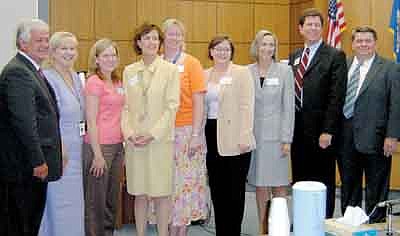
County in spotlight of the state’s highest court for breaking ground on programs
Blatz made time last week to learn from the people who have put into practice state justice system initiatives and who are putting Chisago County on the map in terms of trying new things and breaking new ground.
Most of the information shared with the Chief Justice was about gains made in Chisago County and the Tenth Judicial District in getting law enforcement and the courts to work with the social services bolstering children’s justice and curbing underage drug and alcohol abuse.
Chief Justice Blatz spent the first part of her day in private meetings with Drug Court staff, learning about how this new system is administered and reviewing actual minor-aged cases. A large group gathering later in the day in one of the courtrooms featured the public portion of the visit.
Blatz has served as chief judge in Minnesota since 1998.
When the group convened in public session, local Judge Robert Rancourt spoke about how the Supreme Court’s innovative approaches, championed by Blatz, which have motivated Chisago County and the Tenth District to focus on systematic changes. Judge Rancourt commended Blatz, the state court, Tenth Dist. Chief Judge Schurrer and all involved for their efforts.
Tenth Judicial Dist. Judge Douglas Swenson then explained to Blatz how a small grant the county received (appx. $7,000) has been leveraged to develop an “attitude shift” toward minors and drug and alcohol use.
By making an alcohol violation a mandatory court appearance instead of a fine payable by mail, Judge Swenson said Chisago County is identifying youth substance abusers earlier and getting the word out about the seriousness of committing minor consumption here.
According to 2001 records there were 450 juvenile offenses brought to court here and of those 134 offenders acknowledged they were using drugs or alcohol at the time of their crime.
Upon being charged with the offense in Chisago County the juvenile must appear before a judge and undergoes a chemical use pre-screening.
Swenson also mentioned the county had just eight cases in 2002 prosecuting those who provided alcohol to minors.
In 2003 there were 26 and in 2004 22 cases of procuring alcohol for minors were charged out. Going after those who supply the alcohol was part of that attitudinal change, he said.
There were additional presentations on local domestic abuse initiatives, the methamphetamine task force, the full family placement system (instead of just removing the child, the parents and child live with a foster family) and the use of mediation and other services to keep family cases out of court.
Justice Blatz said at the end of her half-day visit she was inspired and impressed and appreciated seeing these programs being implemented and learning what works and what does not, and getting advice on how to improve the system.

Comments:
Commenting has been disabled for this item.