April 6, 2006 at 6:38 a.m.
Weed inspectors gather for annual heads-up on noxious plants, pests; hear of ditch hay concerns
Weed inspectors gather for annual heads-up on noxious plants, pests; hear of ditch hay concerns
Yet weed inspection and eradication of noxious plants and pests is very serious business. The intelligent and efficient application of weed control can help to create a more balanced environment, or poor weed control practices can affect crop yield, pasture quality and cause havoc in the environment.
In a seminar last week at the North Branch Legion Hall two U of M Extension Service educators drove home the importance of local weed inspectors and weed control.
Krishona Martinson and Patrick Weicherding PhD stressed correct use of chemicals and the key role weed inspectors play identifying invasive plants and pests-- that if left unchecked-- cripple agricultural and wood products industries.
Ditch hay advisory
New in this year’s education session was a warning about spraying herbicide on ditches mowed for feed hay.
Martinson explained that anyone cutting ditch hay should be aware of township or city herbicide spraying schedules for two reasons: the chemicals may adversely affect animals ingesting the hay and there are cases where manure from animals being fed treated ditch hay, that’s later spread on farm fields as a soil nutrient, kills the crop.
Martinson put up color slides of a field riddled with stunted soybeans.
The Extension Service researched this and other cases, and determined the manure spread as fertilizer was contaminated with herbicide.
Back-tracking where the manure came from, it was determined chemicals were ingested in the hay and expelled in the manure.
Martinson said picloram and clopyralid, used in herbicides like Tordon, Stinger, Grazon, Curtail and Transline, are among products of concern.
She told those attending the seminar that they don’t have to halt spraying but if they know anyone haying their local ditches they should be informed of spray dates.
Hay shouldn’t be cut sooner than 60 to 90 days after chemical application. Farmers who are haying ditches should get a spray schedule from the township or county.
MnDOT requires a permit for haying on state rights-of-way and Martinson said MnDOT spray schedules should be available through permitting.
She added that while it hasn’t been conclusively linked to the chemicals, the Extension Service also knows of mares consuming sprayed ditch hay giving birth to foals with deformities.
Martinson also suggested anyone buying hay should inquire if it was cut from treated ditches.
Martinson then went on to describe noxious weeds (ragweed, marestail, lambsquarters, water hemp, etc) known to be developing “tolerance” to herbicides.
She said scientists don’t actually classify them “resistant” but it’s taking increasing quantities of chemicals to impact weed growth.
One of the keys to effective chemical application is timing, she explained.
Spraying can be most effective, she told the weed inspectors, if you watch the weed’s growth cycle. Combining mowing and tilling with spraying in an “integrated” effort works best. “Don’t just use Round-Up year after year after year,” she advised.
Minnesota has 11 species on the weed inspectors’ official list of non-native and noxious weeds. These are plants that are poisonous, or produce substances that inhibit other plant growth, or they take over territory becoming so dense nothing else grows. Some noxious weeds are spread by seed and others by underground network. There are biennial and perennial noxious weeds.
Weed inspectors are required to identify problem plants, establish a procedure to eradicate them and follow-up. They might show up at your property after a complaint is filed, or they spot an outlaw weed-- or you can always call and ask about a specific weed.
Chisago County’s weed inspector is John Jackson, who organizes the annual training session.
Jackson told the seminar attendees that if they are are having a hard time dealing with a land owner or have other problems, he’ll gladly assist. As county inspector he has the legal authority to undertake noxious weed eradication on any property and the ability to bill the landowners should they not cooperate.
This year the forum also focused on pest management, that isn’t strictly the weed inspectors’ responsibility but is needed.
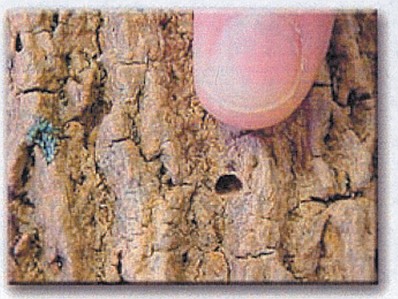
Dr. Weicherding told about the Emerald Ash Borer and the fear that it will settle in Minnesota. This insect has basically caused the state of Michigan to quarantine plant products to within local areas, and it “shutdown the export of woody products out of Michigan,” said Weicherding.
Over 15 million ash trees have been destroyed in Michigan, Ohio, Indiana and southern Ontario. A tree infested with Emerald Ash Borer will always die inside of three years, he promised.
Minnesota is undertaking a survey in 2006 to determine the origin of fire wood sold here, in order to curtail the borer’s arrival in this state. The state has inspectors checking landscaping and nursery stock and coming at this from a number of angles. But, the costs associated with this insect are astronomical, said Weicherding. He asked the weed inspectors to be looking for the Emerald Ash Borer or for ash trees exhibiting borer infestations while they’re out in the field.
Readers are reminded not to transport firewood out of campgrounds when traveling this summer, but burn it all where you are camping.
A hotline to report Emerald Ash Borer to the state is at 1-888-545-6684. And, www.emeraldashborer.info has photos and detailed information.


Comments:
Commenting has been disabled for this item.