January 5, 2006 at 7:22 a.m.
Pre-spawn walleyes on the Rainy River
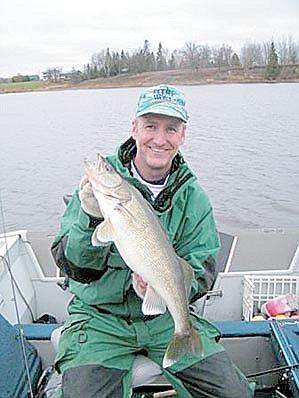
Pre-spawn walleyes on the Rainy River
Techniques for catching ice-out walleyes on the Rainy are pretty basic, with the most popular presentation being a jig and minnow. Because the water is stained, glow jigs, buckshot jigs and jigs equipped with spinner blades go a long way in helping the walleyes locate your offering. A lot of anglers insist that heavier jigs are necessary to stay vertical, and that may be true if the current is moving quickly, but it’s a good idea to use the lightest jigs possible. Ice-out walleyes can be sluggish, so lighter jigs with a slower fall-rate can really make a difference. It goes without saying that the water is extremely cold, so a slow presentation is key. Powering into the current with a bow-mount trolling motor while drifting and jigging downriver does a nice job of slowing a boat’s speed and will keep bait in front of fish for a longer period of time. Pulling crankbaits behind a three-way rig also works well, and some anglers argue that this technique consistently puts larger fish in the boat than jigging.
Rainy walleyes need a break from the heavy current as they make their spawning run and will stage in the deeper holes, particularly the front and sides of holes. Find the holes and you can bet that you’ll be over fish. A lot of fish. Don’t assume walleyes aren’t below the boat because you’re not marking fish on your locator. River walleyes rarely suspend more than a foot off the bottom, so keep one basic rule of thumb in mind: fish the structure and not the fish themselves.
There’s no doubt that planning a trip to the Rainy takes some doing. It’s a fairly long drive and there are some factors to keep in mind before you go. You’ll probably need to launch and load your boat over shore ice at the Frontier, Birchdale or Manitou Rapids ramps, so small, lighter boats and motors are essential. Also, I must tell you that fishing the Rainy River during late March and early April can be cold…and I mean cold. Brisk Canadian winds and horizontal snow and sleet can make things very interesting indeed. I’d recommend that you dress for ice fishing and bring along your sunflower heater on 20# tank. Believe me, handling wet fish and minnows all day long takes a toll on your hands, so some type of onboard heater is a good idea.
I recall a chilly late afternoon with my buddy and brother-in-law, pitching jigs into slow, shallow water adjacent to the Birchdale Rapids. The water was only 4-6 feet deep below the boat and we caught at least a dozen females in the 24”– 28” range. During another trip, the first walleye I hooked and landed taped out at 29.5 inches. Despite the long drive and numb fingers and toes, I’d drive 10 hours round-trip for fishing like that anytime.
Visit www.clementsonresort.com for up-to-the-minute ice and ramp conditions, local weather in the Baudette area, license and limit information and downloadable river maps. Motels, resorts and cabins tend to fill up quickly, so pick a weekend in late March or early April and make your reservations by mid February.
Keep in mind that the Rainy River is a special regulations fishery, and the pre-spawn limit from March 1–April 14, 2005 was two walleyes (with no walleyes exceeding 19.5”). At first mention, a two fish limit seems pretty light, but a couple of 18 or 19 inchers per angler make for a good fish fry at the end of the day. Some folks would like to see the DNR increase the limit on Rainy River walleyes, but that’s not what March and April fishing up there is all about. The Rainy has never been (and hopefully will never become) a “meat run” fishery during the pre-spawn period. If you’re willing to make the drive and don’t mind the cold, the famed Rainy River has the potential to be the ultimate CPR (Catch, Photo and Release) walleye experience.
Dan Brown’s weekly outdoor column is brought to you by Frankie’s Bait and Marine, in Chisago City, and St. Croix Outdoors, in St. Croix Falls, Wis.

Comments:
Commenting has been disabled for this item.