September 20, 2012 at 8:29 a.m.
Iron filings have been added; report due in 2013
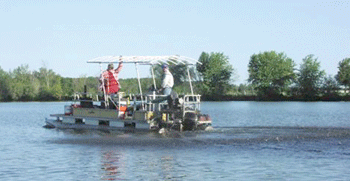
A trial project aimed at reducing excessive weed growth by adding iron filings into Rush Lake has concluded its application stage. Several members of the Rush Lake Improvement Association (RLIA) dispersed thousands of pounds of the powdery iron late last week. Previously the iron filings had been dropped into the lake through holes strategically cut into the ice. The Minnesota PCA suggested to the RLIA in March 2011 to try open water application to see if the filings would settle on the bottom in a more uniform layer, according to a RLIA official. This summer iron filings were applied over open water, through an apparatus built by RLIA volunteers. It is suspended over the stern of a pontoon boat.
The boat can haul 1,000 pounds of contained iron filings out onto the lake at one time. RLIA spokesperson David Cartwright, said George Harrington and Larry Steeves deserve an award for the machine they cobbled together. He stated, “I’m very impressed it worked as well as it did...their ingenuity was essential in the success we had with the last nine acres, because we believe we deposited the iron concentrate more uniformly than was possible through the ice,” Cartwright added. Harrington commented that his inspiration was the salt-sander mechanism on highway department trucks. Volunteers worked off that concept assembling parts: an auger, a spreader disc and later, adding an old bilge pump when it was determined the filings needed to be wetted. Cartwright said it has taken about five years to get to this point.
“This is a very major event for the association.” The group now will test the lake over coming months (years) for what will (hopefully) be an improvement in Rush Lake’s water quality. Limnologist Steve McComas will try to collect sediment samples from all 12 acres total that were treated, this fall. The goal in applying the iron is to bind phosphorus in the sediment so phosphorus won’t be taken up as fertilizer for weeds. The MN Pollution Control Agency and Citizen Review Board have asked the association to submit a study/report in 2013, on the effectiveness of the iron applications. The RLIA has been steered through this process working with McComas and Blue Water Science-- but the bulk of the labor supplied by the all volunteer association has been breaking new ground in water quality science. The RLIA has had some hurdles. The MN Audubon organization requested state intervention in the Rush Lake project last spring. After reviewing the environmentalists’ petition the complaint review arm of the PCA agreed this project is exempt from Environmental Impact analysis as a research effort and gave the association the go-ahead to finish planned iron filing applications.
The RLIA met Saturday, Sept. 15 at Nessel Township Hall, where members got a recap of the project. The iron filings have been primarily funded by the group’s charitable gambling (pulltab) revenues from Rush Hour Bar, Rush Lake Resort and Sidelines, a golf tournament, etc. These monies and RLIA annual dues help the association pay for projects, including testing the iron to make sure it does not contain lead or other contaminants. The testing bill approved at the meeting was for $6,340. The material used in Rush Lake is a product from Keewatin. Crushed taconite ore is passed under an electromagnet, extracting 91 percent pure iron oxide. The balance is sand (silica) and calcium oxide and other trace material. The particles are smaller than 45 microns in diameter. Before spreading the RLIA does an iron concentrate test to meet chemical purity Sediment Quality Target standards.
One way to help The RLIA is self-supporting and does not receive tax revenue. Consider joining the association, with dues available at varying levels or a memorial donation. RLIA also would like to spread the word about an auction of a piece of equipment that was ineffective for use in the iron filings project. You can make bids on a Fimco broadcast/sprayer that can be mounted on a four-wheeler. A silent auction is to take place at the October 20 8 a.m. RLIA meeting. To view the unit and make a bid, Nessel Town Hall is just a few hundred feet north of Rush Point Store. September 29 removal of the buoys from East Rush is scheduled. Removal of markers from West Rush Lake isn’t set yet.

Comments:
Commenting has been disabled for this item.