October 16, 2014 at 12:50 p.m.
Building named honoring Ford
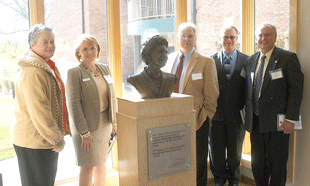
Building named honoring Ford
After the Ford family’s busy time in the bright lights of D.C. came to an end, her daughter Susan Ford Bales told the audience assembled at Hazelden, that she started becoming aware of the depths of addiction her mother was sinking into. Susan said she enlisted her dad’s help to admit Mrs. Ford into Long Beach Hospital.
She declared, “A higher power was watching out for us.”
What her mother accomplished after this point is what she would be most proud of, Susan continued.
“She dedicated herself to erasing the stigma (of addiction) and was determined to not let desperation prevail.”
Betty Ford passed away in 2011, but she would certainly thank Hazelden and her own foundation leadership for having the “vision and determination” to combine, said her daughter.
Mrs. Ford sought advice and guidance on the “Minnesota Model” of treatment from Hazelden as she was creating Betty Ford Center in California,
According to another of the event’s speakers, Hazelden Foundation Chair Susan Fox Gillis, it is fitting to name the Hazelden women’s complex after Betty Ford, whose countless contributions lifted women’s addiction services and options out of the dark ages.
The event at Hazelden attracted national and local figures working in addiction and recovery. Center City staff and patients as well, were warmly welcomed with applause.
Cokie Roberts, a veteran network political commentator and journalist, and a longtime Ford family friend also spoke. The theme of Roberts’ comments last week was “getting behind something you care about.”
She stressed that, “The importance of advocacy can’t be over-stated.”
Roberts noted October is Breast Cancer Awareness Month, a disease Mrs. Ford had. Funding for breast cancer research and care was practically non-existent in the 1970s and 80s, Roberts explained. Breast cancer has only become an important national concern and gets policymakers’ attention because of public advocacy and awareness efforts.
The combining of the Betty Ford Center and Hazelden Foundation missions will contribute toward ensuring the message of hope and healing always has a place in the national dialogue.


Comments:
Commenting has been disabled for this item.